NordVPN vs ExpressVPN vs Surfshark for Streaming
11 min read
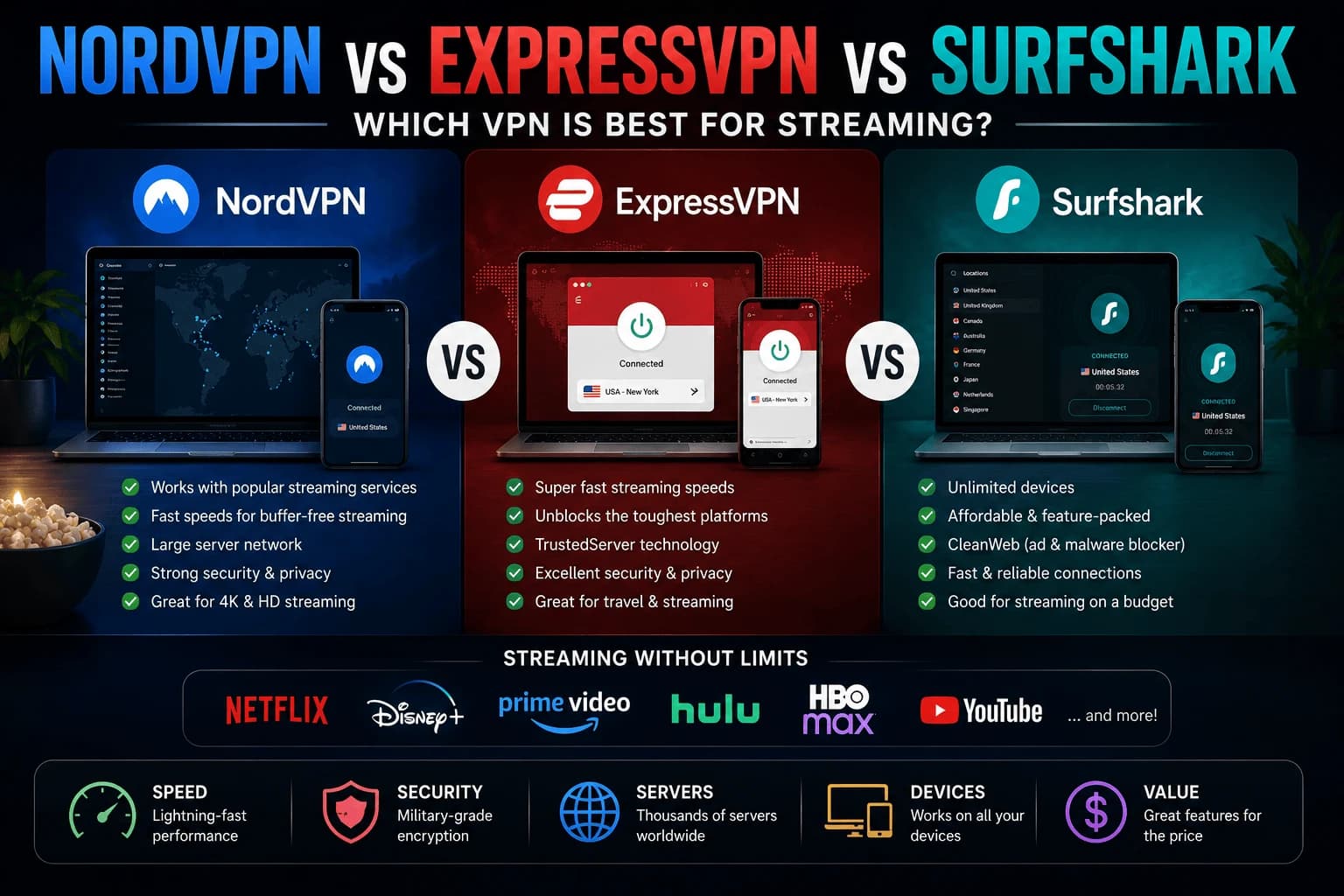
These three come up in nearly every VPN recommendation list, and for good reason, all three are reputable, all three perform well for streaming. The differences that actually matter are narrower than marketing pages suggest.
Device limits
This is the single biggest practical difference. Surfshark allows unlimited simultaneous connections on one subscription. NordVPN and ExpressVPN both cap the number of devices (NordVPN has increased its limit over time; ExpressVPN has historically been more restrictive). For a household running a VPN across multiple phones, a Smart TV, and a streaming box at once, Surfshark's unlimited model removes a real constraint the other two impose.
Protocol and speed
All three now default to modern WireGuard-based protocols. NordLynx for NordVPN, Lightway for ExpressVPN, and a WireGuard implementation for Surfshark. In practice, speed differences between the three are small and depend more on which has a good server near you than on the underlying protocol.
App support on streaming devices
All three offer native apps for Fire TV and Android TV, meaning you can run the VPN directly on the streaming device instead of only at the router level. This matters if you want to change virtual location per-app or per-device rather than applying one VPN connection to your entire home network.
The price comparison marketing pages don't want you to do
ExpressVPN is the priciest of the three, and it isn't close, especially on shorter terms, where the gap is at its widest. NordVPN and Surfshark sit closer together, with Surfshark usually winning outright on long-term pricing. But the "per device" math is where the real story is: Surfshark's unlimited connections mean a five-device household is effectively paying a fraction of what the same household pays per device on NordVPN or ExpressVPN's capped plans. Compare the headline price and you'll get it wrong.
The audit history that actually earned its reputation
ExpressVPN's long independent-audit track record isn't marketing filler. It's the reason security-conscious users default to it despite the price. NordVPN's audit history tells a more interesting story: it underwent one after an actual server-security incident forced infrastructure changes, which is either a red flag or evidence the company responded correctly under pressure, depending on how charitable you're feeling. Surfshark has audited its no-logs claims too, but with a shorter runway of history behind it than the other two, not a mark against it, just less time for anything to have gone wrong or been caught.
Which one fits your situation
- Choose Surfshark if you have a large household with many devices and want the lowest cost per device.
- Choose NordVPN if you want a strong balance of price, performance, and a large server network with good regional coverage.
- Choose ExpressVPN if you prioritize the longest independent audit history and don't mind paying more for it.
Why the renewal price is the one that matters
All three advertise heavily discounted long-term plans, and the headline figure is almost always an introductory rate. Renewal typically costs considerably more, so comparing advertised prices compares three introductory offers rather than three services.
Work out what each costs over two or three years including renewal, not just the first term. That reordering frequently changes which looks cheapest, because providers discount the initial period by different amounts.
Longer terms also mean paying upfront for a service you can't fully evaluate yet. Which makes the refund window worth more attention than the discount.
Use the refund period properly
All three offer a money-back guarantee, and it's the only way to genuinely evaluate a VPN — performance depends on your connection, your distance from their servers, and the devices you own, none of which a review can tell you.
Test the things that actually break in daily use:
- Speed on your own connection, measured with and without the VPN, at the time you normally watch
- The app on your TV, not just your phone — TV apps are consistently the weakest
- Reconnection after sleep, since streaming devices sleep constantly
- The services you actually use, because unblocking varies per service and changes weekly
A week of real use tells you more than any comparison, this one included.
What all three do equally well
Worth stating plainly, because comparison articles are incentivised to manufacture differences. All three are established providers with modern protocols, audited no-logs claims, kill switches, split tunneling, and native apps across the major platforms.
For most people, any of the three works fine. The meaningful differences come down to device count, total cost including renewal, and whether their nearest server happens to be close to you, which is specific to you rather than to the provider.
If you're deciding between them, the deciding factor is more likely your household device count than any technical distinction.
Related reading
- What actually matters in a streaming VPN: the criteria behind this comparison
- kill switches: how to verify yours works on any provider
- region-locked libraries: why unblocking claims are the least reliable thing to compare on
Frequently Asked Questions
Which is faster for streaming: NordVPN, ExpressVPN, or Surfshark?
All three use modern WireGuard-based protocols and perform similarly on a good connection. Real-world speed differences come down more to server location relative to you than to the provider itself.
Which VPN allows unlimited devices?
Surfshark is the only one of the three with no device limit on a single subscription, which matters for larger households running phones, TVs, and streaming boxes simultaneously.
Is ExpressVPN worth the higher price?
ExpressVPN is consistently the most expensive of the three. The premium buys a slightly more polished app experience and strong independent audit history, but NordVPN and Surfshark deliver comparable core streaming performance for less.
Do any of these work with Fire TV or Android TV apps?
Yes, all three have native apps for Fire TV and Android TV, so you can run the VPN directly on the streaming device rather than only on your router or phone.
Why is the advertised VPN price not what I end up paying?
The headline figure on long-term plans is almost always an introductory rate, and renewal typically costs considerably more. Comparing advertised prices compares three introductory offers rather than three services — work out the two or three year cost including renewal instead, which often changes which looks cheapest.
How should I test a VPN during the refund period?
Measure speed on your own connection with and without the VPN at the time you normally watch, use the app on your TV rather than only your phone, check it reconnects after the device sleeps, and test the specific services you use. Performance depends on your connection and location, which no review can tell you.
Is there a meaningful difference between these three for most people?
Less than comparison articles imply. All three are established providers with modern protocols, audited no-logs claims, kill switches, split tunneling and apps across the major platforms. The deciding factor is usually household device count, total cost including renewal, and whether their nearest server is close to you.