Antenna + Streaming vs Cable: The Real Cost Over Time
10 min read
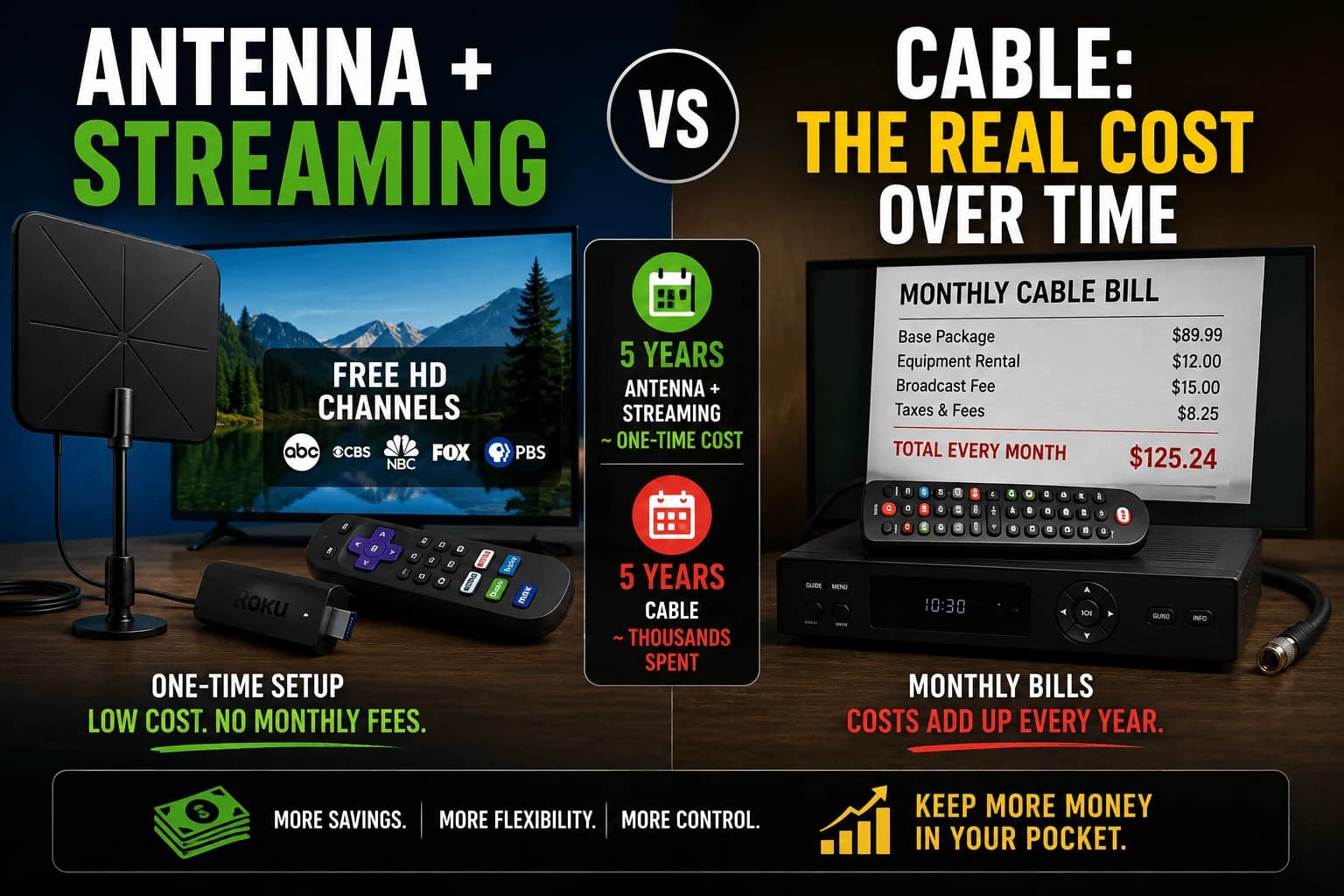
The number on the cable commercial and the number on your actual bill twelve months later rarely match, and that gap is where most of the "cord-cutting saves money" argument actually lives. Here's the real math, with every cost included instead of just the ones that make antenna-plus-streaming look good.
The one-time cost that keeps paying off
An over-the-air antenna is a single purchase, not a subscription. Buy it once, and it keeps pulling in local broadcast channels (major networks, local news, PBS) with zero ongoing fee for as long as you own it. That purchase price typically costs less than one single month of a cable bill, which means the antenna has effectively paid for itself before your first streaming subscription payment is even due.
What cable's sticker price usually doesn't include
The advertised cable rate is frequently a limited-time promotional price, not the number you'll actually pay after the introductory period ends. Equipment rental fees for a cable box, broadcast surcharges, and regional sports fees often show up as separate line items not reflected in the headline number advertised. The bill that lands a year in is commonly higher than what convinced you to sign up.
Streaming isn't automatically cheap. That's the part people skip
Here's the honest version cord-cutting advocates don't lead with: stack up enough streaming subscriptions trying to replicate everything cable offered, and the total creeps right back toward what you were paying before. The real savings don't come from streaming being inherently cheaper. They come from control. You pick exactly which services earn your money, and you can cancel any one of them the same afternoon you decide it's not worth it. Cable never gave you that option.
Internet is a real cost in this comparison too
A fair comparison has to count your broadband bill, since every streaming service requires it. In practice, this is rarely a deciding factor. Most households already pay for internet regardless of how they watch TV, but leaving it out of the math entirely isn't an honest comparison.
Whether an antenna will actually work where you live
Reception depends entirely on your distance from broadcast towers and what's physically between you and them, hills, dense trees, tall buildings can all weaken or block a signal. Before buying anything, check an online signal-strength map for your specific address; it takes a few minutes and tells you realistically which channels you'll actually receive, rather than guessing based on what worked for someone else's house across town.
Adding it up
Antenna plus a lean streaming lineup beats cable on cost for most households, often by a wide and growing margin as cable's promotional pricing expires and the standard rate kicks in. The math gets closer, and sometimes flips, for households that end up subscribing to five or six streaming services simultaneously trying to replicate cable's full channel lineup, at that point, some of the cost advantage of cutting the cord starts to erode.
The fees that don't appear on the advertised price
Cable's headline rate is rarely what you pay, and the gap is larger than most people expect. Line items to look for on an actual bill:
- Broadcast TV fee: covers local channel retransmission, charged separately from the package, and raised frequently
- Regional sports fee: applied whether or not you watch sport
- Equipment rental: per box, so a three-TV household pays three times
- DVR service: usually separate from the box rental
- Promotional expiry: the largest single factor, since the advertised rate typically covers 12 months
Comparing an advertised cable price against streaming subscriptions understates the gap considerably. Compare against a real post-promotional bill instead.
What an antenna gets you that streaming doesn't
Beyond cost, three genuine advantages worth weighing:
Picture quality on live broadcasts. Over-the-air signals are typically less compressed than the same channel delivered over cable or a streaming service, so live sport in particular can look better on an antenna than through a paid subscription.
No internet dependency. Broadcast keeps working when your connection doesn't, which matters during outages and severe weather, exactly when local news matters most.
No ongoing cost or account. One purchase, no subscription, no price rises, nothing to cancel.
Where an antenna falls short
Being even-handed, since cord-cutting guides tend to skip this:
- No cable networks. Antenna gets broadcast channels only: the many cable-only networks aren't available at any price.
- Reception is location-dependent. Distance, terrain and buildings decide what you receive, and no equipment fully overcomes a bad location.
- No built-in recording. Adding a DVR means separate hardware and cost.
- Weather sensitivity. Marginal signals degrade in heavy rain or wind.
- Indoor antennas are inconsistent. Beyond roughly 25 miles from the towers, an outdoor or attic antenna is usually required.
The hybrid most households actually land on
The common endpoint isn't antenna-only or streaming-only. It's an antenna for local channels, live news and sport, plus two or three streaming services rotated seasonally rather than held year-round.
Rotation is the part people skip, and it's where the savings are. Subscribing for the month a particular show airs and cancelling afterwards costs a fraction of holding five services permanently, and it's the difference between cord-cutting saving real money and quietly recreating a cable bill one subscription at a time.
Related reading
- budget guide: the hardware side of cutting the cord cheaply
- Stick vs built-in TV apps: whether you need to buy anything at all
- wired versus wireless guide: making a streaming-only household reliable
Frequently Asked Questions
How much can an over-the-air antenna actually save compared to cable?
A one-time antenna purchase typically costs less than a single month of cable, and it carries local broadcast channels with no ongoing subscription fee at all — the savings compound every month afterward.
Do I still need internet if I switch to antenna plus streaming?
Yes, a broadband connection is required for any streaming service, and that cost should be included in a fair comparison — though most cord-cutting households already pay for internet regardless of their TV setup.
Will an antenna work in every location?
No. Reception depends on distance from broadcast towers and terrain/building obstructions. Checking a signal-strength map for your specific address before buying is worth the five minutes it takes.
Does cable's advertised price usually go up after the first year?
Very commonly, yes. Promotional cable pricing is typically locked for a limited introductory period, after which the bill increases to the standard rate — a jump that can be substantial and is easy to miss when comparing sticker prices.
What fees are hidden in a cable bill?
Look for a broadcast TV fee for local channel retransmission, a regional sports fee charged whether or not you watch sport, per-box equipment rental (a three-TV household pays three times), and separate DVR service. Comparing an advertised rate against streaming understates the gap — compare against a real post-promotional bill.
Does an antenna give better picture quality than cable or streaming?
On live broadcasts it often does. Over-the-air signals are typically less compressed than the same channel delivered over cable or a streaming service, so live sport in particular can look noticeably better on an antenna than through a paid subscription.
What are the downsides of using an antenna?
You get broadcast channels only, so cable-only networks are unavailable at any price. Reception depends on distance, terrain and buildings. Recording needs separate DVR hardware, marginal signals degrade in bad weather, and indoor antennas are unreliable beyond roughly 25 miles from the towers.
How do I stop streaming subscriptions from costing as much as cable?
Rotate rather than accumulate. Subscribing for the month a particular show airs and cancelling afterwards costs a fraction of holding five services year-round. That habit is the difference between cord-cutting saving real money and quietly recreating a cable bill one subscription at a time.


